Woodpecker Damage to Siding in Boulder: Causes and Fixes
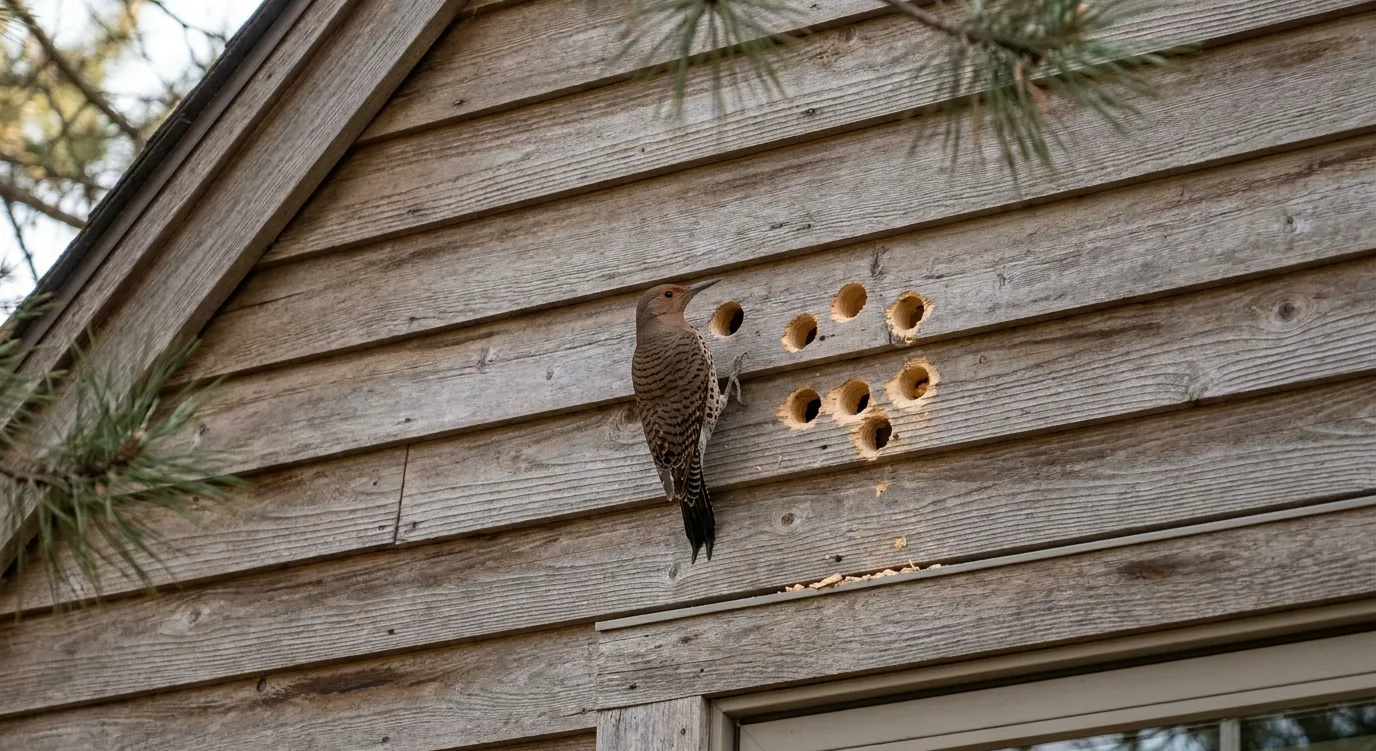
Few siding problems surprise Boulder homeowners more than a row of neat round holes in the wall under the eaves. Along the Front Range, woodpeckers, and northern flickers in particular, are one of the most common causes of siding damage we see. The birds are not attacking your home at random, and understanding why they are there is the first step to stopping them. In this post, we cover the causes, the fixes and the ways our Siding Repair Experts keep them from coming back.
Why Woodpeckers Target Siding
There are three main reasons a woodpecker works on a house. The first is drumming: in spring, males hammer on resonant surfaces to claim territory and attract mates, and hollow siding, gutters and trim make an excellent drum. The second is nesting or roosting: in late summer and fall, flickers may excavate a cavity to shelter in, which is how you end up with a large hole and a hollow space behind it. The third is food: if insects are living in or behind the siding, the birds will dig for them. Homes backing onto open space in Wonderland Hills, North Boulder and Table Mesa see more of this simply because more birds live nearby.
Which Siding Gets Hit Most
Cedar and other wood siding is the classic target. Stucco and synthetic stucco systems are also vulnerable because the birds can break through the thin outer layer to the foam behind. Fiber cement and masonry are much harder for them to damage. If you are comparing materials, our post on the best siding materials for Boulder's climate goes into durability in more detail.
What the Law Says
Woodpeckers, including northern flickers, are protected under the federal Migratory Bird Treaty Act. That means you cannot trap, harm or kill them, and active nests cannot be disturbed, without a federal permit. The practical answer is to make your siding less attractive and to repair damage quickly, not to go after the birds.
How to Stop the Damage
The most effective steps are usually simple. Hanging lightweight bird netting from the eaves over the affected wall keeps birds off the siding without harming them. Reflective tape, mylar strips or pinwheels near the damaged area can discourage them, especially if you move them around. If insects are the draw, treating the insect problem removes the reason to dig. Above all, repair holes promptly, because an open cavity invites more activity and lets water into the wall.
Repairing the Holes
Small holes in wood siding can be filled with an exterior-grade filler, sanded, primed and painted to match. Larger cavities, or boards that have been split, are better replaced. On stucco, the damaged area needs to be cut back and patched properly so water cannot get behind it. Where one wall is hit year after year, covering it with a more resistant material is sometimes the most economical long-term fix, and our Siding Installation Services can handle that. For a sense of the costs involved, read siding installation costs in Boulder explained, and if you are tempted to patch it yourself, our DIY vs. pro siding tips are worth a look first.
The Internet Center for Wildlife Damage Management's guide to woodpeckers is a useful reference on bird behavior and humane deterrents.
At Boulder Siding Group, we repair woodpecker damage every year and can help you choose a fix that holds up. If you have holes in your siding in Gunbarrel, Martin Acres or elsewhere in Boulder, call us at (720) 799-0253 to schedule a visit.
Need Professional siding installation Services?
Contact Boulder Siding Group today for expert siding installation services in Boulder.
Call (720) 799-0253